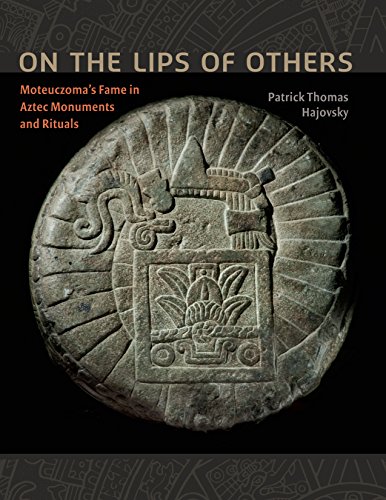
Moteuczoma, the final king who governed the Aztec Empire, used to be infrequently visible or heard by way of his topics, but his presence used to be felt during the capital urban of Tenochtitlan, the place his deeds have been recorded in hieroglyphic inscriptions on monuments and his command used to be expressed in hugely subtle ritual performances. What did Moteuczoma's "fame" suggest within the Aztec international? How used to be it created and maintained? during this cutting edge research, Patrick Hajovsky investigates the king's inscribed and spoken identify, exhibiting the way it wonderful his charisma from these of his constituencies, specifically different Aztec nobles, warriors, and retailers, who additionally vied for his or her personal grandeur and repute. whereas Tenochtitlan reached its maximum dimension and complexity lower than Moteuczoma, the "Great Speaker" innovated upon repute by means of tying his very identify to the Aztec royal office.
As Moteuczoma's repute transcends Aztec visible and oral tradition, Hajovsky brings jointly an enormous physique of proof, together with Nahuatl language and poetry, indigenous pictorial manuscripts and written narratives, and archaeological and sculptural artifacts. The kaleidoscopic collection of assets casts Moteuczoma as a divine king who, whereas inheriting the celebrity of prior rulers, observed his personal popularity develop into entwined with imperial politics, ideological narratives, and everlasting gods. Hajovsky additionally displays on posthumous narratives approximately Moteuczoma, which created a truly varied experience of his reputation as a conquered topic. those contrasting elements of popularity supply vital new insights into the politics of personhood and portraiture throughout Aztec and colonial-period sources.